"And I got the part. I began to take classes. Sense-memory exercises. Practice making things real. Before your performance create a reality for yourself to step into. I remember that when I began taking class we'd have a pretend teacup and pretend to drink from it. How hot is it, how full is it, is there a saucer, is there a spoon, are you going to put sugar in it, how many lumps. And then you sip it, and others were transported by this stuff, but I never found any of it helpful. What's more, I couldn't do it. I was no good at the exercises, no good at all. I'd try to do this stuff and it never would work.... I'd look ridiculous as I held my pretend teacup and pretended to drink from it. There was always a sly voice inside me saying, 'There is no teacup.'"
-- Philip Roth, The Humbling
--
Really need to stop buying books on impulse. Not that I need to deliberate for weeks and fill a special jar labeled "next book money," but two days ago when I walked into the Bookworm in West Omaha the first title that jumped at me (actually it was the humongous "ROTH" printed above the title) I removed from the rack and stuck it under my arm, and there it stayed until I laid it on the checkout counter.
Full disclosure: I was there to buy The Great Gatsby, because my baby sister just started reading it in 11th-grade English and when I scanned my stacks for my own copy, I was shocked to find I never had one.
Anyway, The Humbling is good so far: sort of like Roth's Everyman but with a theatrical bent. The protagonist is an ailing actor bewildered by the impotence of his lost talent. Some great passages in there that every actor can relate to (and maybe any artist: at one point he says, "You can get very good at getting by on what you get by on when you don't have anything else," which is sort of brilliant).
--
Snapped at a co-worker last night. Felt bad about it. Maybe "snapped" is the wrong word. "Coldly accepted criticism" is more accurate. I was swamped. I felt he was telling me how to do my job. I coldly accepted his criticism.
Went through a phase when this was the norm. After working in Scotland a few years back, I caught this (European?) snobbishness that made me assertive and assholish when I came back. I wrote emails with flippant confidence, I spoke to superiors with audacity and passivity, I kissed a girl out of nowhere and nothing, for no real reason. I bought booze specifically so I could talk about it. I tried to give looks to people that implied I was waiting for them to make up their minds. I swaggered.
The chill lasted about half an hour, when I felt guilt like a headache. I apologized and he said he was only trying to help and I said I knew.
--
Catfish, incidentally, is only showing at one cinema in Omaha, about fifteen minutes west from work, and I got out there to see it. Was very excited, was ready to enjoy. Go figure: I enjoyed it. Probably a better movie about Facebook than The Social Network, which is really a myth about how websites are created and a parable of wealth. Catfish is not as shattering as the trailer suggests--it's more like a slow spiderweb cracking a windshield. Not so much a movie with a twist as a movie with a paradigm shift that keeps pushing and pushing.
See it if you get the chance.
--
Rehearsals start in a few days. It'll be nice to do That again.
10.13.2010

10.09.2010
Backing

-- Colum McCann, Let the Great World Spin
--
Been almost a month, I think, back in Nebraska. I brag to distant friends and former co-workers that I have accomplished a lot in a few weeks, but really I have settled a lot. I've settled more than I've sought, attained, conquered. I feel like the heyday of my comeback (such as it is) was the second week, when I nailed three auditions in a row, callbacks subsequent.
Bam. Bam. Bam.
And the truest accomplishment in the days following? I finished White Noise. Helluva book. Those last 50 pages are a vicarious speed race confrontation with death and a smooth denouement chaser. And somewhere, a voice on a TV said, "Woo hoo!"
--
So, the jobs. I'm in a show at the local children's theatre, The Rose, which runs in a little over a month, for a little over a month. Rehearsals start next week. I'm getting paid--plus--and they've cast me in a spring show, too, playing a flamboyant-tortured-artist-teen. Through the bam-bam auditions, a director funneled me to a talent agency's auditions, where I read one day as a confused patron chewing beef jerky and the next as a puppeteer/cashier trying to sell a lottery ticket. And aside from a brief, ill-prepared foray into the world of Aussie accents, and a grungy visit to read for an independent film, this is what I've got. By way of auditions and roles, anyway.
I'm teaching, too. My high school drama teacher owns the local dance academy, and every Thursday night I teach the "Broadway" classes: improvisation intro, voice control, expressive movement. Brief lectures. All girls. Forty-five minutes. Out by 7:15.
And yes, I'm working at a restaurant. Chic and corporate, with bulbous chandeliers and onyx walls, steps of service, pricey cocktails. Had the first blowout VIP party last night, and I bar-backed. Never done it before, gonna do it lots more. There is education in the handling of wine bottles, life lessons in the observation of drinkers, parables in the crating of glasses. It means I'm on a track (of sorts) to becoming a bartender. Months. Until I can flip and shake and twist and shout. I'm also one of few employees allowed into the wine incubator, a glassed-in tower in the middle of everything like a wine phone booth, a shoe box of silence. And maybe it was the deejay's choice of music, the smell of citrus squished into mats, the trimness of the clientèle or the impossibility of crowding behind that bar, but I had a lot of fun. It's challenging, but fun.
Being a server's assistant is cheesecake. Bar-backing is peanut brittle.
9.28.2010
Sushi
"We sat in a blood-red booth. Orest gripped the tasseled menu with his chunky hands. His shoulders seemed broader than ever, the serious head partly submerged between them.
'How's the training going?' I said.
'I'm slowing it down a little. I don't want to peak too soon. I know how to take care of my body.'
'Heinrich told me you sleep sitting up, to prepare for the cage.'
'I perfected that. I'm doing different stuff now.'
'Like what?'
'Loading up on carbohydrates.'
'That's why we came here,' Heinrich said.
'I load up a little more each day.'
'It's because of the huge energy he'll be burning up in the cage, being alert, tensing himself when a mamba approaches, whatever.'
We ordered pasta and water."
-- Don DeLillo, White Noise
--
Prior to today, I could have counted the number of sushi rolls I'd ever eaten on one hand. The last time was in Seattle, with my sisters, and it was bought in a grocery store but also delicious. I remember the one with the salmon meat wrapped around the rice because I liked it the most. Up to that point, I thought sushi referred to the seaweed wrap and how it was rolled and sliced.
Today, I had an outrageous amount of sushi. Something like twelve samples, and this after trying more than a dozen of the restaurant's "American" dishes.
I am bursting and my stomach is making massage noises.
--
We've been training for almost a week. The first few sessions were mainly lectures and (embellished) readings from packets we received. We were given CDs with menu items and photos, told to study everything. We were given another set of CDs which contain daily quizzes, reviews to be completed before moving on. We are given gold coins for answering questions and volunteering to do odd jobs like picking up hole-punched paper circles from the carpet with chopsticks. These coins can be redeemed later for all kinds of "expensive" prizes.
We are told this training is very cutting-edge, experimental, intuitive, effective.
This morning after a break, my table's discussion turned to note-taking and typing, the latency of abandoning college habits. Someone mentioned finding herself unable to take notes by hand during classes. I contributed that my baby sister is allowed to use laptops during her high-school classes, that her teacher gathered email addresses from each student on the first day of school and created a website for literary discussions, that she is allowed to email her teacher until midnight with any questions about homework.
I remember being in tenth grade and having my CD player confiscated during biology. I think that might have been around the same time I heard a pop-music ringtone for the first time.
--
One of the sushi samples dropped from my pinching chopsticks into my square soy sauce bowl. Sushi chefs, we were told, cringe when people dunk their rolls into soy sauce because it overwhelms any other flavor. It's true.
We were also told that sushi refers to the rice, not the fish. So you can prepare sushi rice and eat it with beef or chicken and it would still be a sushi dish. Sticky rice is not sushi rice. Wasabi is almost always made from paste before it is made into a condiment, because fresh wasabi is extremely potent and pricey.
I'm proud to say that I learned a lot and tried everything (except the sliced ginger). I have a lot of studying to do.
--
Last night, I had this idea for a short story:
A young man moves back to the Midwestern suburban home of his adolescence. There is a neighborhood association that regulates things like weekly lawn trimming and property lines in a democratic fashion. The residents realize--with satisfaction--that no one on the block smokes anymore. One night, the young man has a cigarette and flicks the butt onto the sidewalk, where it is discovered the next day.
A Girardian sacrificial crisis results.
--
There are training sessions during the day and in the evenings. Yesterday, I went in the evening. A completely different vibe. Fewer coffee mugs. Only half of the trainees smoke. More arms tucked over the backs of chairs, more wisecracks, more Yes's than nods.
This morning, I downed three cups of coffee by the end of the first hour.
Three more days of food tasting, followed by some mock service sessions (I think of them as improv rehearsals) and then a simulated business day with invited guests. We are warned constantly about Secret Shoppers. More people arrive every day and they have stopped introducing themselves. The kitchen clanks and wafts, the construction sectors grind and sputter and ratchet, the lighting fixtures get fancier and fancier.
Faces are getting familiar. The restaurant is opening soon.
'How's the training going?' I said.
'I'm slowing it down a little. I don't want to peak too soon. I know how to take care of my body.'
'Heinrich told me you sleep sitting up, to prepare for the cage.'
'I perfected that. I'm doing different stuff now.'
'Like what?'
'Loading up on carbohydrates.'
'That's why we came here,' Heinrich said.
'I load up a little more each day.'
'It's because of the huge energy he'll be burning up in the cage, being alert, tensing himself when a mamba approaches, whatever.'
We ordered pasta and water."
-- Don DeLillo, White Noise
--
Prior to today, I could have counted the number of sushi rolls I'd ever eaten on one hand. The last time was in Seattle, with my sisters, and it was bought in a grocery store but also delicious. I remember the one with the salmon meat wrapped around the rice because I liked it the most. Up to that point, I thought sushi referred to the seaweed wrap and how it was rolled and sliced.
Today, I had an outrageous amount of sushi. Something like twelve samples, and this after trying more than a dozen of the restaurant's "American" dishes.
I am bursting and my stomach is making massage noises.
--
We've been training for almost a week. The first few sessions were mainly lectures and (embellished) readings from packets we received. We were given CDs with menu items and photos, told to study everything. We were given another set of CDs which contain daily quizzes, reviews to be completed before moving on. We are given gold coins for answering questions and volunteering to do odd jobs like picking up hole-punched paper circles from the carpet with chopsticks. These coins can be redeemed later for all kinds of "expensive" prizes.
We are told this training is very cutting-edge, experimental, intuitive, effective.
This morning after a break, my table's discussion turned to note-taking and typing, the latency of abandoning college habits. Someone mentioned finding herself unable to take notes by hand during classes. I contributed that my baby sister is allowed to use laptops during her high-school classes, that her teacher gathered email addresses from each student on the first day of school and created a website for literary discussions, that she is allowed to email her teacher until midnight with any questions about homework.
I remember being in tenth grade and having my CD player confiscated during biology. I think that might have been around the same time I heard a pop-music ringtone for the first time.
--
One of the sushi samples dropped from my pinching chopsticks into my square soy sauce bowl. Sushi chefs, we were told, cringe when people dunk their rolls into soy sauce because it overwhelms any other flavor. It's true.
We were also told that sushi refers to the rice, not the fish. So you can prepare sushi rice and eat it with beef or chicken and it would still be a sushi dish. Sticky rice is not sushi rice. Wasabi is almost always made from paste before it is made into a condiment, because fresh wasabi is extremely potent and pricey.
I'm proud to say that I learned a lot and tried everything (except the sliced ginger). I have a lot of studying to do.
--
Last night, I had this idea for a short story:
A young man moves back to the Midwestern suburban home of his adolescence. There is a neighborhood association that regulates things like weekly lawn trimming and property lines in a democratic fashion. The residents realize--with satisfaction--that no one on the block smokes anymore. One night, the young man has a cigarette and flicks the butt onto the sidewalk, where it is discovered the next day.
A Girardian sacrificial crisis results.
--
There are training sessions during the day and in the evenings. Yesterday, I went in the evening. A completely different vibe. Fewer coffee mugs. Only half of the trainees smoke. More arms tucked over the backs of chairs, more wisecracks, more Yes's than nods.
This morning, I downed three cups of coffee by the end of the first hour.
Three more days of food tasting, followed by some mock service sessions (I think of them as improv rehearsals) and then a simulated business day with invited guests. We are warned constantly about Secret Shoppers. More people arrive every day and they have stopped introducing themselves. The kitchen clanks and wafts, the construction sectors grind and sputter and ratchet, the lighting fixtures get fancier and fancier.
Faces are getting familiar. The restaurant is opening soon.
9.23.2010
Bread

"INTERVIEWER
Mr. Wilder, why do you write?
WILDER
I think I write in order to discover on my shelf a new book that I would enjoy reading, or to see a new play that would engross me.
INTERVIEWER
Do your books and plays fulfill this expectation?
WILDER
No."
--
Been a while, blog, been a while. I intended to document my roadtrip from Cincinnati to Omaha, on a daily or even semi-daily basis, and even made a thing of telling friends and family to check the travel blog regularly for updates. I ended up only posting once or twice during the first half of the trip. I guess I gave it up once I realized that after driving through the night, meeting and remeeting dozens of people, walking a city or two, drinking, laughing, eating burger after burger, remarking and observing and perceiving--that after all that, the last thing one wants to do is sit down at a computer and type. Much less when you're borrowing internet from the friend waiting to take you somewhere. Better to check Facebook and email and give the laptop a rest.
So now, here I am, and here we are. It is raining: strange raindrops falling in crosshatch because of confused wind. They seem to tickle the trees, which squirm and jerk. My Panera lunch (I've budgeted one meal out per week) is finished. Nearby, a group of seniors sip soup, and to my immediate right, a trio of business lunchers stab at Romaine cuts. When the third luncher arrived, she showed her shoes in a kind of shuffle, saying, "This one's a seven, this one's a six," which got a laugh of familiarity (Oh, Karen, you never change). Earlier today, in a Wal-Mart parking lot, I saw a woman who looked exactly like Kathy Bates driving a big red pickup.
I am back in Nebraska.
--
With things to show for it, I am proud to say. After sending dozens of job inquiry emails, creating and recreating ten versions of my work resume (Office-Admin, Publishing, Coordinator, Childcare, etc.), dressing up for five interviews and making it to four auditions--all within a fortnight--I arrive at today, a bleary Thursday, all set with a job and a show.
The Job. Tonight, I start training at a new restaurant opening in Omaha next month. I have signed a release in which I promise not to mention the company name in any website or blog, but I will say that the prospective clientèle are affluent travelers in the city on business (TIP$). It's not catering, thank God, but it is food. I interviewed this morning with a law firm for a position as a legal assistant, too, and will hear back sometime next week.
The Show. I'm cast as Slightly Soiled in The Rose's Peter Pan, which opens this fall. This is great news because The Rose is a professional children's theatre, meaning I will be paid. Also, their scope provides opportunities for growth. In other words, I can continue being a professional actor while staying close to home. (At home for the moment, but more on that later.)
I met with my high-school drama teacher a few days ago. She owns the local dance academy and has asked me to help teach some musical theatre classes, perhaps to grow a separate program out of it. There's the 2011 summer camp, too, and we're thinking about possibly collaborating on writing a new adaptation of a popular kid's book. I'm just glad for honest and creative work.
--
Other achievements from the past week and a half include helping my baby sister to beat the Super Mario Bros. Wii game, taking my grandma out for a spin in my classy gold Dodge Neon, running around with Ajax, and attending two Antiochian Orthodox services (so far). I plan to attend a Greek one this Sunday, but the one I went to last week is very beautiful, very swanky.
Readingwise, I have run into a bit of a snag, but it may help me resist what a friend has diagnosed as "book polygamy." I still have The Brothers K and White Noise to finish, and at the base library I picked up Lolita and Let the Great World Spin. But when I went to the local library to get a card, I was informed that our house is in a "no man's land as far as libraries go," and as a result I was considered a nonlocal. See, Nebraska has a library system based on townships, not counties, meaning that your house has to be located within city limits in order for your membership to be free. However, the zoning is based on county. The long and short is that while the post office believes we live in Bellevue, the library does not.
So I'm without free library privileges for a while. Quite a switch from Cincinnati, where at one point I had cards for libraries in four counties.
--
Other switches from Cincy:
There are fewer Starbuckses here. I chauffeur my baby sister after school. Uniformed folks are everywhere, as are men in button-up shirts without ties and short-haired women in pantsuits. Nights are quieter. Gas is a quarter cheaper, but there's corn in it.
--
This weekend is my sister's Homecoming. She's going. Nebraska plays on Saturday, and after job training an old friend and I are going to hang out. He owns two gas stations, I think. He wants to move to LA and get into movies. Someday soon some former teachers and I are going to have lunch and catch up. I am going to spend that time getting used to calling them by their first names.
It's good to be home.
8.30.2010
Drive
"There's never gonna be a moment of truth for you
While the world is watching."
-- Ben Folds, "Learn to Live with What You Are"
--
It struck me that maybe my favorite part of working here has been the morning drive. Fifteen minutes, always northward, never a need to speed. And I've never written about it. So:
--
It is a Ben Folds morning. Start up and the world moves to "Rent a Cop," the pound of piano in a go-get-'em, push-onward rhythm. My window is down as I navigate my neighborhood, and the bass is intense. When I stop at a corner, a trio of sullen teens glare in the direction of my blare. I set off. The sun seems big, extended streaks of shine on the hood and in the mirror's view of the trunk.
Halfway done with the highway and a state cop SUV pulls up alongside like a protector and a menace. The car is magical, magnetic, magnanimous--it slows all traffic around it. Like a heroic film cliche, the statie pulls out ahead and leaves us in his wake, so much exhaust. It passes a ratty van and in the gust a piece of duct tape peels and flings from the van's body, spinning laterally in the air like a lawn ornament in limbo, standing and twisting in space. It does not hit my windshield.
I stop for tea at a gas station. I have never been there before. An ethnic man, burly in a blue checkered shirt, stands behind the counter, eying customers. I zero in on the Arizona fridge. A black youth slides through the aisles with stealth. The cashier accuses him of trying to steal some Jolly Ranchers. They argue. The cashier gives up and says, "Seventy-five cents." The youth slaps a dollar bill on the counter. "Keep the change," the kid says, and swaggers out. An elderly black lady is buying cigarettes next. She asks what that was about. The cashier says, "I saw him." He comes around the counter and points at a shelf of candies. "This stack was like this," he shows with his hand, "and then he was there and it's like this now. I saw him. I saw him." He repeats it to himself as he rings up the woman's cigs. "I saw him. I saw him." When it's my turn, he notices my tie and says, "Good morning, sir." I say, "Hey." He says, "I saw him." I say, "Okay."
Back in the car, skirting a construction crew within a block of work, a car comes at me in my lane. It slows to a confused halt, the driver realizing that this is a one-way street that is blocked off behind me, ahead of him. He creeps his car backwards like a small mammal, shifts, and makes a turn.
I get to work. I write about the drive.
While the world is watching."
-- Ben Folds, "Learn to Live with What You Are"
--
It struck me that maybe my favorite part of working here has been the morning drive. Fifteen minutes, always northward, never a need to speed. And I've never written about it. So:
--
It is a Ben Folds morning. Start up and the world moves to "Rent a Cop," the pound of piano in a go-get-'em, push-onward rhythm. My window is down as I navigate my neighborhood, and the bass is intense. When I stop at a corner, a trio of sullen teens glare in the direction of my blare. I set off. The sun seems big, extended streaks of shine on the hood and in the mirror's view of the trunk.
Halfway done with the highway and a state cop SUV pulls up alongside like a protector and a menace. The car is magical, magnetic, magnanimous--it slows all traffic around it. Like a heroic film cliche, the statie pulls out ahead and leaves us in his wake, so much exhaust. It passes a ratty van and in the gust a piece of duct tape peels and flings from the van's body, spinning laterally in the air like a lawn ornament in limbo, standing and twisting in space. It does not hit my windshield.
I stop for tea at a gas station. I have never been there before. An ethnic man, burly in a blue checkered shirt, stands behind the counter, eying customers. I zero in on the Arizona fridge. A black youth slides through the aisles with stealth. The cashier accuses him of trying to steal some Jolly Ranchers. They argue. The cashier gives up and says, "Seventy-five cents." The youth slaps a dollar bill on the counter. "Keep the change," the kid says, and swaggers out. An elderly black lady is buying cigarettes next. She asks what that was about. The cashier says, "I saw him." He comes around the counter and points at a shelf of candies. "This stack was like this," he shows with his hand, "and then he was there and it's like this now. I saw him. I saw him." He repeats it to himself as he rings up the woman's cigs. "I saw him. I saw him." When it's my turn, he notices my tie and says, "Good morning, sir." I say, "Hey." He says, "I saw him." I say, "Okay."
Back in the car, skirting a construction crew within a block of work, a car comes at me in my lane. It slows to a confused halt, the driver realizing that this is a one-way street that is blocked off behind me, ahead of him. He creeps his car backwards like a small mammal, shifts, and makes a turn.
I get to work. I write about the drive.
8.24.2010
Bursting
"Make no mistake. I take these children seriously. It is not possible to see too much in them, to overindulge your casual gift for the study of character. It is all there, in full force, charged waves of identity and being. There are no amateurs in the world of children."
-- Don DeLillo, White Noise
--
The Nerd ended, as all shows do. It was fun, as all shows are.
I am glad it is over, as I always am.
In attendance were three co-workers, four college friends, and six former students of mine. They aren't the sort of statistics one ought to read much into (nor are reviews), but it's interesting. And something worth remembering, I guess. Students see shows. So do friends.
--
One student dropped by today with her family to present me with a gift. A beautiful little card, a gift card to a hip food place nearby, and a baggie of chocolate-covered espresso beans.
The mother mentioned that she figured I'd be cleaning out my refrigerator about this time, seeing as how I'm a week away from moving and all. And the thought crossed my mind that I really ought to be cleaning a lot of things right now. Instead, here I am, the last one to leave the office again, listening to The Decemberists and wrapping things up.
I've already eaten four beans. My chest is bursting; my eyelids have forgotten how to fall.
--
In preparation for the road, I've been increasing my listening options exponentially. A lot of Death Cab for Cutie albums, a lot of showtunes, a lot of spoken word. Maybe I'll make good use of the radio this time, too.
For nights and stir-crazy hours, I'm planning to take a pair of Netflix DVDs along: parts one and two of The Corner. I'll watch what I can, when I can, maybe in the corners of Paneras and parking lots.
And Lord knows, I'm traveling with plenty of books.
--
I just need to get rid of furniture, and I'm set. I told my sister last night that all I really feel like keeping are books, movies and clothes.
--
So: I'd better get to it.
-- Don DeLillo, White Noise
--
The Nerd ended, as all shows do. It was fun, as all shows are.
I am glad it is over, as I always am.
In attendance were three co-workers, four college friends, and six former students of mine. They aren't the sort of statistics one ought to read much into (nor are reviews), but it's interesting. And something worth remembering, I guess. Students see shows. So do friends.
--
One student dropped by today with her family to present me with a gift. A beautiful little card, a gift card to a hip food place nearby, and a baggie of chocolate-covered espresso beans.
The mother mentioned that she figured I'd be cleaning out my refrigerator about this time, seeing as how I'm a week away from moving and all. And the thought crossed my mind that I really ought to be cleaning a lot of things right now. Instead, here I am, the last one to leave the office again, listening to The Decemberists and wrapping things up.
I've already eaten four beans. My chest is bursting; my eyelids have forgotten how to fall.
--
In preparation for the road, I've been increasing my listening options exponentially. A lot of Death Cab for Cutie albums, a lot of showtunes, a lot of spoken word. Maybe I'll make good use of the radio this time, too.
For nights and stir-crazy hours, I'm planning to take a pair of Netflix DVDs along: parts one and two of The Corner. I'll watch what I can, when I can, maybe in the corners of Paneras and parking lots.
And Lord knows, I'm traveling with plenty of books.
--
I just need to get rid of furniture, and I'm set. I told my sister last night that all I really feel like keeping are books, movies and clothes.
--
So: I'd better get to it.
8.20.2010
Apologetics
 "We are interested in doing good children's theatre, and in providing a valid learning experience. Therefore, we prefer children who want to learn about the discipline and skills of the art of performing first, and who want to have fun second."
-- mission statement of the Caryl Crane Children's Theatre
--
Mission statements are generally not worth the ink with which they're printed. They are full of words and commas, lists of usually three slightly dissimilar abstractions pertaining to the industry. It's true especially of arts organizations, where the mission statement is debated at length as if it were equal in importance to a Constitutional amendment. Words are dissected, spliced, compounded, and ultimately rejected. I've only ever been a part of two such sessions, and I never want to be a part of one again. It's like writing an English paper with a dozen suddenly disagreeable people. And at the end of all the arguments, you're left with an almost perfectly meaningless jumble of nice-sounding phrases that no one really likes. And this is the banner you have chosen for your group. You put it on flyers, brochures, posters, websites, ads, merchandise...this is what patrons will read right after they see your company's name on a piece of paper and right before they decide whether you're worth spending money.
The longer the mission statement, frankly, the easier it is to ignore. It's like a tax code no one will enforce.
All that said, the mission statement from the Caryl Crane Children's Theatre in Huron, OH (the town where I spent two summers at the Huron Playhouse), is solid. Why? Two reasons:
1.) It's short. We live in a quick-paced society, and the faster you can spit out your mission, the better. The fewer words that appear as a blob of text on an otherwise stunning layout, the better.
2.) It's honest. They clearly know what they want from their students. They communicate that clearly, too, with a directness most arts organizations lack. The diction is simple. They don't say, "quality entertainment that enriches students academically, socially and emotionally;" instead, they say, "a valid learning experience." This implies, too, that other groups may not be able to offer a valid learning experience, just the outward signs of one. And not only does the second sentence pose a sort of challenge to prospective students, but it also tells you the priorities by which the program operates. Notice the sentence structure: "...we prefer children who want..." It's the language of Help me help you, give and take.
I guess I should also add that their tone is unapologetic. Too often, in matters of business and marketing, the arts appear to be apologizing for themselves, for their very presence, as if they are severely out of place. It's true that the artistic community has reason to apologize if they are not serving the greater good, or if what they produce is not enlightening or intriguing, or if they are asking for money that ought to be given to more practical, helpful groups. But something like a children's theatre is always going to fulfill those criteria--they serve the community, the kids are enlightened and intrigued constantly, and they usually subsist on donations, cheap tuition, and low ticket prices (if any). There is no reason to apologize. At the Caryl Crane, they don't.
--
Been thinking more about this kind of thing lately. Subjects pertaining to how the arts are perceived and how they present themselves. I'm thinking about pursuing a graduate degree (Masters of Arts Administration) with the ultimate goal of starting my own theatre company. Like Eminem at the end of Eight Mile, I think I just need to do my own thing.
I'll spend the next months preparing for the GMAT and revising applications. The University of Cincinnati has a dual-degree program, as does the closer-to-home University of Wisconsin-Madison, which results in an MBA and MAA. That's what I'm interested in if I am to go back to school. "In this economy," and all that.
I thought briefly about some MFA programs, but from what I've seen, it all still comes down to whether you're any good at the thing you studied. You have an MFA in Playwriting, great, but has anyone outside of obligation ever produced your plays? You got your MFA in Acting, sure, but you still had to audition to get your last job, right? I'm not trying to discount anyone's degree or life choice. I'm just saying that for me, given my current ambition, an MFA would not really help.
Is that too apologetic?
8.12.2010
Casts
"at least someone came to see us"
-- caption under the latest photo of me tagged on Facebook
--
I'm glad to be "at least someone."
Context: some of the kids at The Children's Theatre STAR program performed at a Pops concert at the end of July. The composer was the music director at our camp, and he wanted to give some selected students a chance to show off, get us some publicity, etc. The concert was on a Friday night, after the final day of classes. We had rescheduled one of our performances so that this small group could do the Pops gig.
During that day, it became more and more apparent that no one was planning to attend the concert. Our best singers were performing in front of thousands of people, and maybe none of their teachers would be there.
-- caption under the latest photo of me tagged on Facebook
--
I'm glad to be "at least someone."
Context: some of the kids at The Children's Theatre STAR program performed at a Pops concert at the end of July. The composer was the music director at our camp, and he wanted to give some selected students a chance to show off, get us some publicity, etc. The concert was on a Friday night, after the final day of classes. We had rescheduled one of our performances so that this small group could do the Pops gig.
During that day, it became more and more apparent that no one was planning to attend the concert. Our best singers were performing in front of thousands of people, and maybe none of their teachers would be there.
It seemed wrong.
Two of us ended up going, me and one of the dance teachers. I can't blame anyone for not going--people are busy, and really, how many things are going on on a given Friday night?--but I can say that the kids were ecstatic to see us. We got hugs. And, apparently, someone took a picture of us snapping along with what I can only assume was a doo-wop song. And you can kind of tell from the picture, but it was a gorgeous night.
I should also mention that a lot of these kids' classmates came, too.
--
Best show of The Nerd was last night. So far. By far.
--
Rumors notwithstanding, we have cast all four shows for the 2010-11 season. People will find out within a week from today.
I've noticed that some of the rookie teens who were called back must have misunderstood our notification policy. I received a call today from a girl who sounded frantic about not getting a call yet. I told her it was next week. Then I saw another teen who had updated a status bemoaning failure. Don't fret yet, kids. We need a week to make all the arrangements before we can mail out contracts.
I've also noticed that even though I'm within 20 days of moving and leaving this company, I'm still saying "we."
--
Study guides comprise the main part of my workload these days. Years ago, when I worked for the publishing company in Hillsdale, I spent the last few weeks of employment doing the same thing I'm doing now: namely, scanning through the educational benchmark standards of various states. At the publishing company, it was only Michigan's. But here, I'm looking at Ohio, Indiana, and Kentucky.
(I thought about putting in links to those websites, but who the hell's gonna read that stuff?)
I know states have to have educational standards. But these tomes of regulations are so dense, so poorly and ambiguously worded, that I believe I'm losing brain power by reading through them. Not that I think they should be glitzed up and filled with colorful diction. Just...I don't know. Maybe they should just not have so many standards about so many things.
Here's a sample, taken from Kentucky's reading requirements for 4th grade:
--
I wish I didn't have to read this stuff in order to create an effective, marketable, relevant study guide. But I do.
--
On the upside, I got a call about a job in Omaha. We'll see about it in a few weeks, I guess, but it would be a great part-time gig if I can land it. House management for a solid venue. Could be just the thing.
I've also been nibbling at acting and directing work in the area. For now, I'm only going for gigs that pay. Gotta have my own standards.
Shortly after signing on to play Peter Pan in the spring, I found out that the main children's theatre in Omaha is doing Peter Pan - The Musical! this fall and winter. Auditions are days after I get back home. You bet I'm gonna be all over that audition. I won't play Pan, but I also don't have to. And that is a very cool thing not to have to do.
Two of us ended up going, me and one of the dance teachers. I can't blame anyone for not going--people are busy, and really, how many things are going on on a given Friday night?--but I can say that the kids were ecstatic to see us. We got hugs. And, apparently, someone took a picture of us snapping along with what I can only assume was a doo-wop song. And you can kind of tell from the picture, but it was a gorgeous night.
I should also mention that a lot of these kids' classmates came, too.
--
Best show of The Nerd was last night. So far. By far.
--
Rumors notwithstanding, we have cast all four shows for the 2010-11 season. People will find out within a week from today.
I've noticed that some of the rookie teens who were called back must have misunderstood our notification policy. I received a call today from a girl who sounded frantic about not getting a call yet. I told her it was next week. Then I saw another teen who had updated a status bemoaning failure. Don't fret yet, kids. We need a week to make all the arrangements before we can mail out contracts.
I've also noticed that even though I'm within 20 days of moving and leaving this company, I'm still saying "we."
--
Study guides comprise the main part of my workload these days. Years ago, when I worked for the publishing company in Hillsdale, I spent the last few weeks of employment doing the same thing I'm doing now: namely, scanning through the educational benchmark standards of various states. At the publishing company, it was only Michigan's. But here, I'm looking at Ohio, Indiana, and Kentucky.
(I thought about putting in links to those websites, but who the hell's gonna read that stuff?)
I know states have to have educational standards. But these tomes of regulations are so dense, so poorly and ambiguously worded, that I believe I'm losing brain power by reading through them. Not that I think they should be glitzed up and filled with colorful diction. Just...I don't know. Maybe they should just not have so many standards about so many things.
Here's a sample, taken from Kentucky's reading requirements for 4th grade:
Student demonstrates extensive
understanding of literary, informational,
persuasive, and practical/ workplace
texts.
Demonstrates an extensive
understanding of literary elements (e.g.,
setting, characters, plot, and
problem/solution) when reading literary
text
Demonstrates an extensive
understanding of text features (e.g., lists,
tables, graphs, etc.) when reading
informational text
Demonstrates an extensive
understanding of fact and the author’s
opinion when reading persuasive text
Demonstrates an extensive
understanding of text (e.g., locating and
applying information for authentic
purposes, interpreting specialized
vocabulary, and following directions)
when reading practical/workplace text
--
I wish I didn't have to read this stuff in order to create an effective, marketable, relevant study guide. But I do.
--
On the upside, I got a call about a job in Omaha. We'll see about it in a few weeks, I guess, but it would be a great part-time gig if I can land it. House management for a solid venue. Could be just the thing.
I've also been nibbling at acting and directing work in the area. For now, I'm only going for gigs that pay. Gotta have my own standards.
Shortly after signing on to play Peter Pan in the spring, I found out that the main children's theatre in Omaha is doing Peter Pan - The Musical! this fall and winter. Auditions are days after I get back home. You bet I'm gonna be all over that audition. I won't play Pan, but I also don't have to. And that is a very cool thing not to have to do.
--
And, oh yeah. I bought a harmonica last week.
I can play three songs.
I can fake many, many more.
8.11.2010
Rags
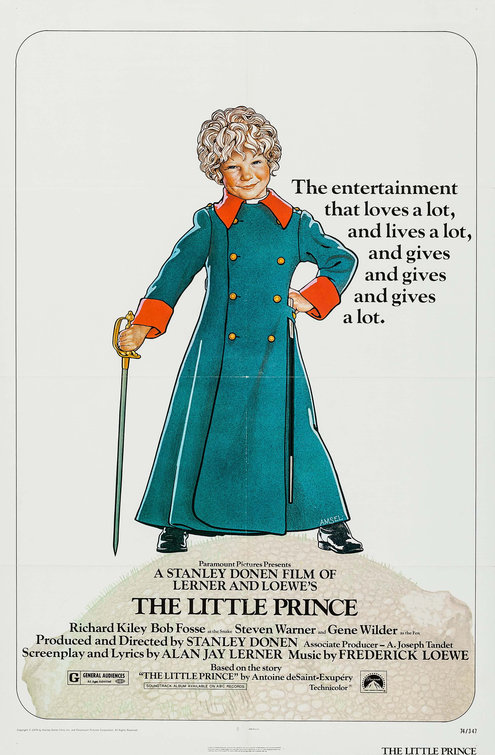
"Not even the locomotive engineer knows that," said the switchman.
And a second brilliantly lighted express thundered by, in the opposite direction.
"Are they coming back already?" demanded the little prince.
"These are not the same ones," said the switchman. "It is an exchange."
"Were they not satisfied where they were?" asked the little prince.
"No one is ever satisfied where he is," said the switchman.
And they heard the roaring thunder of a third brilliantly lighted express.
"Are they pursuing the first travelers?" demanded the little prince.
"They are pursuing nothing at all," said the switchman. "They are asleep in there, or if they are not asleep they are yawning. Only the children are flattening their noses against the windowpanes."
"Only the children know what they are looking for," said the little prince. "They waste their time over a rag doll and it becomes very important to them; and if anybody takes it away from them, they cry..."
"They are lucky," the switchman said.
-- The Little Prince, by Antoine de Saint Exupery
--
As I've been making my way through this brilliant book, I've been wondering if anyone else thought to adapt it for the stage. Of course, someone else has. Of course, a group of those someones made it a musical. Of course, it's also a film.
A famous film. Who knew. If your best thoughts aren't stolen by the ancients, then at least they are stolen by pioneers of the entertainment industry.
Still: it would make a wonderful children's play. If you could just get some widely focused spotlights on the stage, you could do the different planets very nicely.
--
The children's play that I am actually working on, Wait! I Want to Tell You a Story, continues to go well. I returned to the daycare today. I had each kid read two different characters. About half of them can read, and half of the ones who can do so haltingly, with an unnerving staccato like someone laying heavy bricks and wearing clicky shoes,--so there's that obstacle. But at least a few of them can at least read well, and to them I've given the choice roles, the ones with changing intentions, more lines.
Between readings, a skeptical child asked at my elbow: "Have you ever directed anything before?"
"Yes," I said. "I've written some plays, too."
He didn't seem impressed. "Huh."
Kid'll be on some theatre board someday.
--
We've plowed through auditions at The Children's Theatre. Callbacks end tonight, which is devoted entirely to Disney's The Jungle Book Kids.
It's a subdued spectacle. Kids show up with their parents and the downstairs heats up, they check in at my table and ask funny questions and the parents wince or chuckle and tow their offspring toward a chair. They put on expensive shoes with the seriousness and familiarity of monks at prayer. They go into the room sweating and emerge smiling or on the verge of tears. They know what they have done. The parents know, they know the body language of talented children, and even if it is not their child sobbing in the corner, their eyebrows dip and their mouths open with sadness. This is completely different from adult auditions. Adult actors have learned to trap all responses inside their chosen outfits, behind trim binders full of material, under heads of immaculate hair. Adults know not to ask questions lest, and they watch these emotive children fall from professionalism with all the grace of tipping file cabinets. Adults hang themselves on the walls, impassive portraits waiting their turn to be seen, appraised, and passed by. Adults understand economy of scale and opportunity cost--they scrutinize constantly: If I don't get this, I can go home early, at least. My November will be free and I can visit my cousin. I can audition at another place next week. I don't know or care where my next job comes from--I just want to get there.
But for the kids, this is it. Here, now. Their hopes are raised, and they will be dashed before evening's end, and they are the only ones who know it, because they are the only ones who want it badly enough.
--
If you told an adult, after a poor audition, that they had to buy new expensive shoes and work tirelessly for hours on perfecting their performance, they would nod, drive home, and try to forget about ever wanting to work for you.
If you tell that to a kid, they will nod, ride home, and do exactly what you say. (If they want it badly enough, that is.) They just might blow you away the next day, because adults have also trained themselves to stop expecting great things from children.
8.06.2010
Valiant

"The most valiant thing you can do as an artist is inspire someone else to be creative."
-- Joseph Gordon-Levitt, in Details magazine, July 13, 2010
--
Yes.
And whether that someone else is a kid in an acting class, a chuckling grandma in the first row, or a free-thinking, educated adult capable of making deliberate positive changes in his/her life, it is still valiant. I'm proud to be among the ranks of inspirers.
--
Also: I made the Enquirer. The article is flattering, full of etymology. If you're in the Cincinnati area, come see The Nerd, my last show here...
...my last show, that is, until next spring. When the world premiere of Disney's Peter Pan Jr. hits the Taft Theatre stage in April, yours truly will originate the title role.
That's right. I'm playing Peter Pan.
When they first offered me the role, I respectfully declined. But months later, the offer has been renewed, and I simply cannot turn it down. It's work--good work at that, well-paying work--and it's a world premiere; Disney has never before allowed any theatre to stage a version of their 1953 movie. They workshopped it for months. They revised the script multiple times. It's unclear how involved they will be in the rehearsal process, but there's a good chance they will see the show. And if they like what they see...hey.
Plus, I'll actually be able to put "flight" on my resume.
--
I was sitting at my desk, about to make a phone call to a parent who wants to schedule a last-minute audition tomorrow for her son. I looked down at the Post-It where I'd scribbled her number, and the last digit, a 4, looked odd. I touched it and a bent fleck of eraser stuck to my finger. It was a 1.
--
The time has come for me to start wrapping things up at work. With my boss going on maternity leave, I have absorbed a healthy load of paperwork, mostly preparation for the upcoming school tour. Van oil changes, study guide designs, stuff like that.
Possibly my most valiant task is to leave a record of my WorkShops here. Each teaching artist for TCTC can do any of the WorkShops and adapt it to their own style, and I have done just that with about half of the offerings in our repertoire. My approach hasn't always worked--sometimes it fails outright--but anyway, there is some knowledge to be passed on.
For instance, this week I started a "From the Page to the Stage" residency at a daycare half an hour away. (This is the place where a kid called me Jackie Chan.) Apparently, this WorkShop has never been booked before, so it's crucial that I chronicle how it goes. So far, we've only introduced ourselves and chosen a book (page) which we will adapt into a play (stage). There's a final performance in two weeks, in the late afternoon just as parents are about to pick up their kids. Next week we'll cast and block, and in the third week we'll rehearse.
The book? Wait! I Want to Tell You a Story, by Tom Williams. I just finished the adaptation today.
The choosing of the book was interesting. I went to the library's children section to browse, and a librarian asked to help. I told her what I wanted: a short picture book with a large cast of characters that would appeal to a wide age range. The librarian told her fellows, and soon there was a squad of six or more librarians scanning through the aisles of skinny spines. They plopped thin, jacketed hardcovers in a pile and kept searching. At the daycare, I showed covers and held a vote, and then read the most popular ones, which were voted on again. There was Lincoln-Douglas-style debate which allowed the kids to make arguments for or against certain picks. Then we had the final vote. They picked the story in which a muskrat, about to be eaten by a tiger, belays his demise by telling a story...in which a frog is about to be eaten by a shark but belays it by telling a story...and so on.
I had hoped they would pick Edwina, the Dinosaur Who Didn't Know She Was Extinct, but for a purely selfish reason: I want to adapt it into a play anyway.
--
Here's to valiance.
Subscribe to:
Posts (Atom)